
Meet the MPA Collaborative Network
Critter Ambassadors
The Collaborative Critters were developed by our partner and friend, artist Phillip James of Animink Clothing, a Black-owned business based in Los Angeles. The animated Critters are based on real-world animals that can be found along California’s coast and ocean, including inside the state’s network of 124 marine protected areas (MPAs). Just as our nation’s parks and wilderness areas protect special places on land, California’s MPAs protect a wide array of ocean and estuarine habitats and species. MPAs provide homes where human disturbance is limited for species like those represented by the Collaborative Critters. Learn more about the Critter ambassadors by clicking on their profiles below.

See Ina and Xlewes come to life in the bilingual QuiverVision 3D augmented reality coloring pages and interactive experiences. Find them at www.mpacollaborative.org/kids.
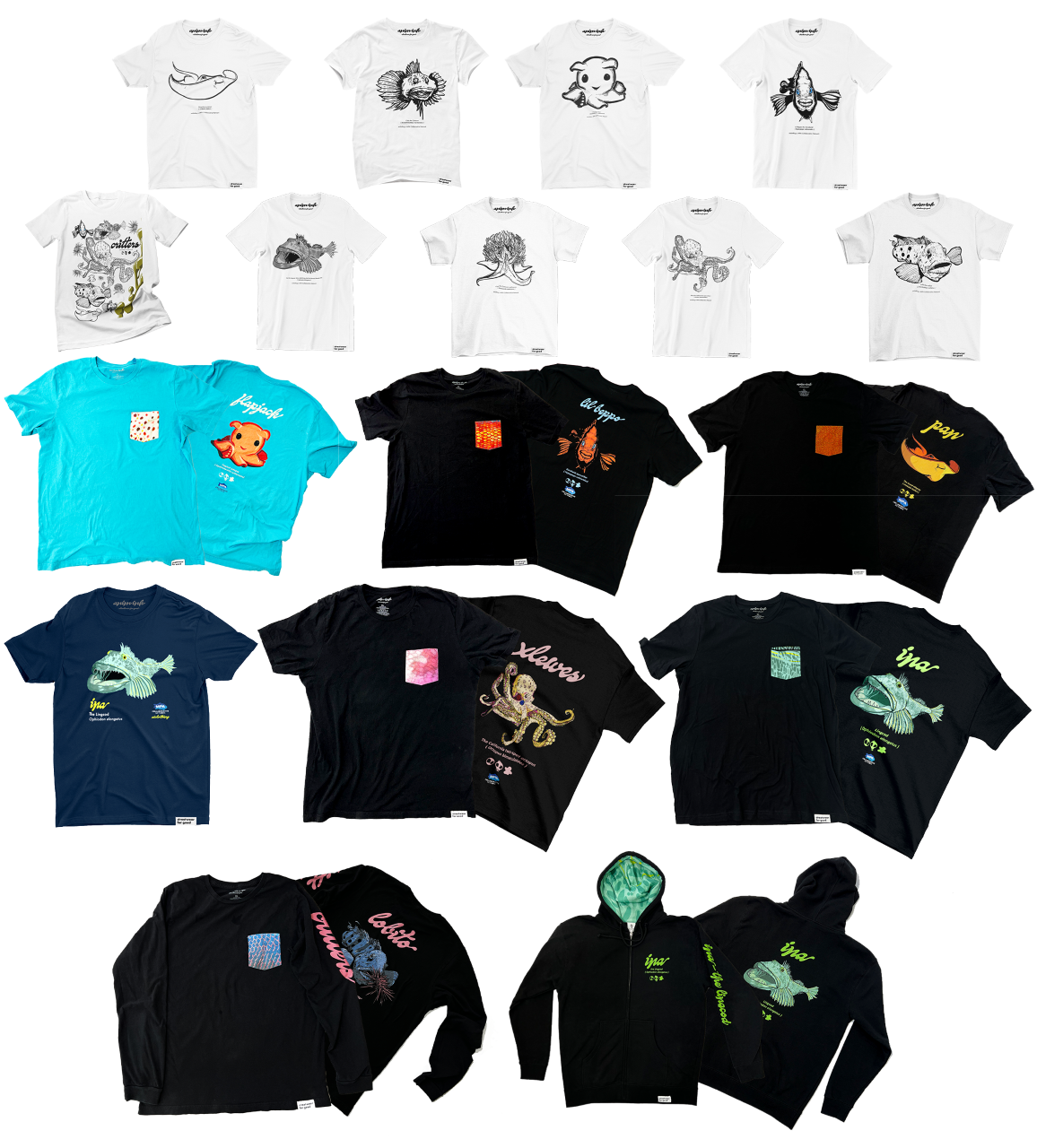
Get Your Critter Gear!
Purchase your own Critter Gear and help raise awareness about California’s MPAs and the MPA Collaborative Network! A portion of the proceeds benefit the MPA Collaborative Network and support our efforts to empower coastal communities to advance MPA management and encourage ocean stewardship.
Artwork funded by a grant from the California Ocean Protection Council and Coastal Quest.
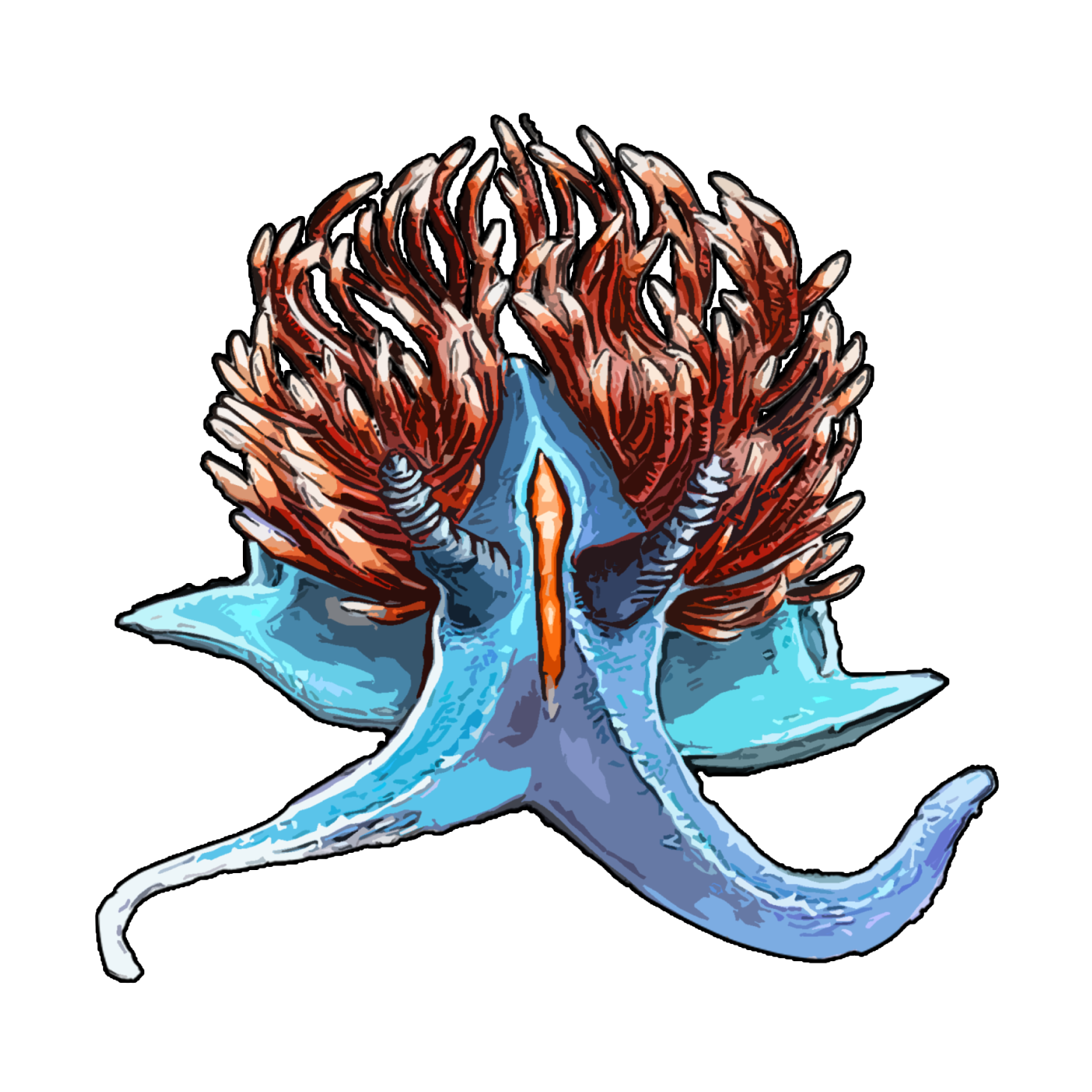
Opal the Opalescent Nudibranch
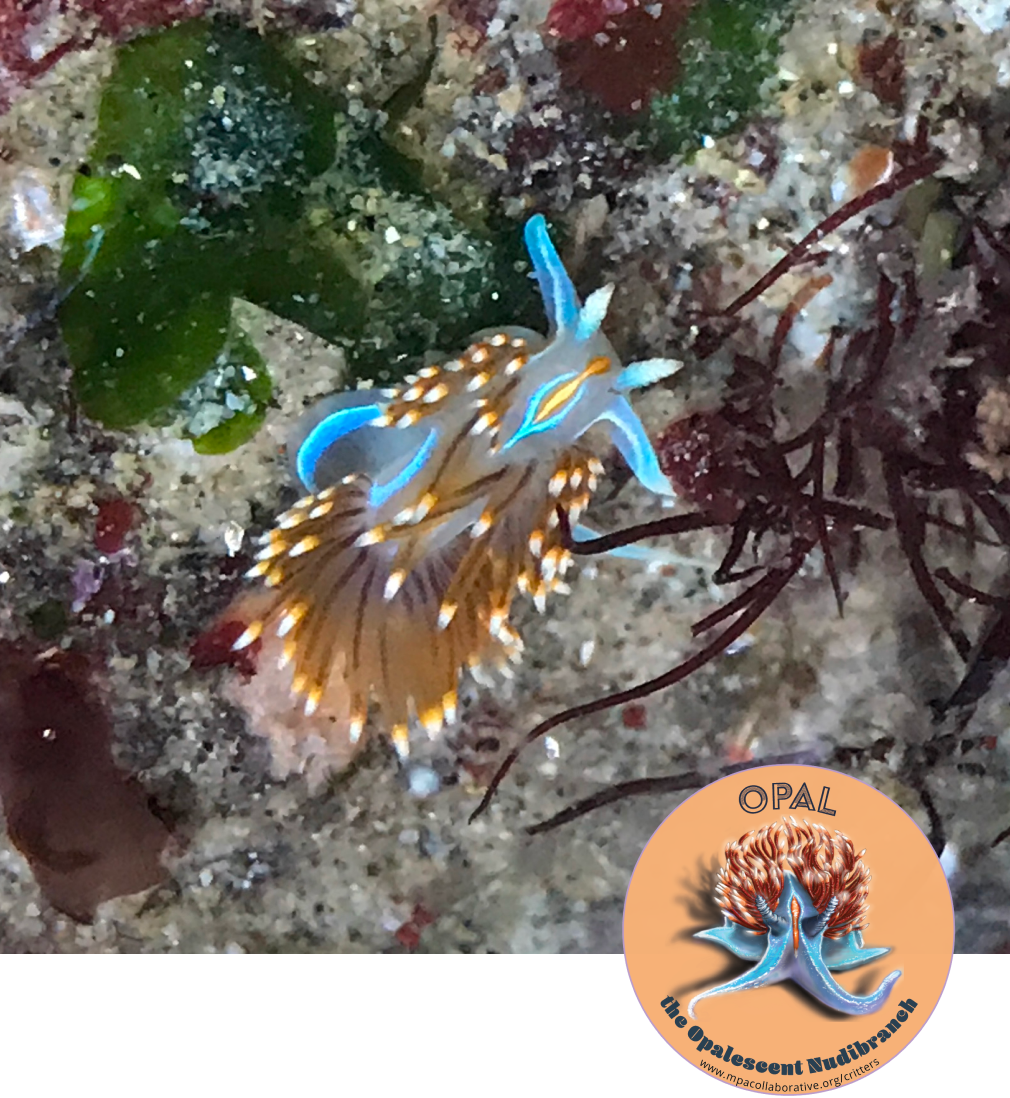
Photo by Hannah Sarver, Pacific Grove Museum of Natural History.
Genus: Hermissenda Species: opalescens
Size: About 2 inches long Habitat: Inter-tidal Zone
Range: Eastern Pacific along North American Coast
Favorite Marine Protected Area (MPA): Montara State Marine Reserve located in San Mateo County
Nudibranchs are sea slugs related to land slugs and snails. Opalescent nudibranchs eat tiny invertebrates like sea anemones and their relatives. These prey have special stinging cells (like little harpoons) called nematocysts. “One of the most amazing things about them is that they take the stinging cells found in their prey and use them for their own defense!”, says expert and California Academy of Sciences Citizen Science Co-Director, Dr. Rebecca Johnson. The exact range of the opalescent nudibranch is unknown. You can help solve the mystery by collecting iNaturalist observations of nudibranchs in the wild. Visit iNaturalist.org to get started.
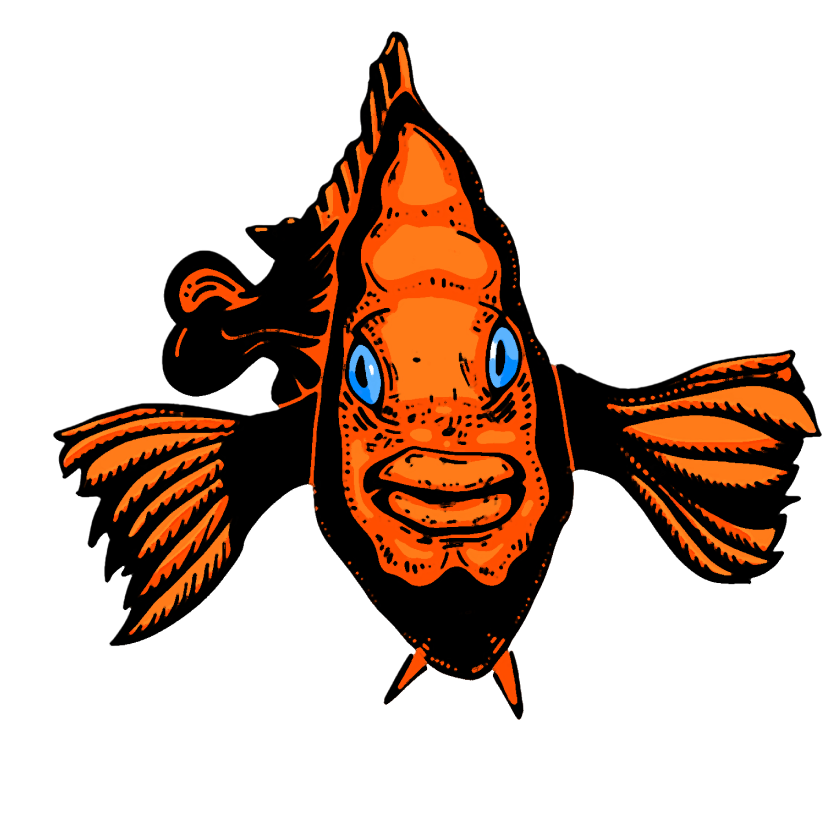
Lil Beppo the Garibaldi
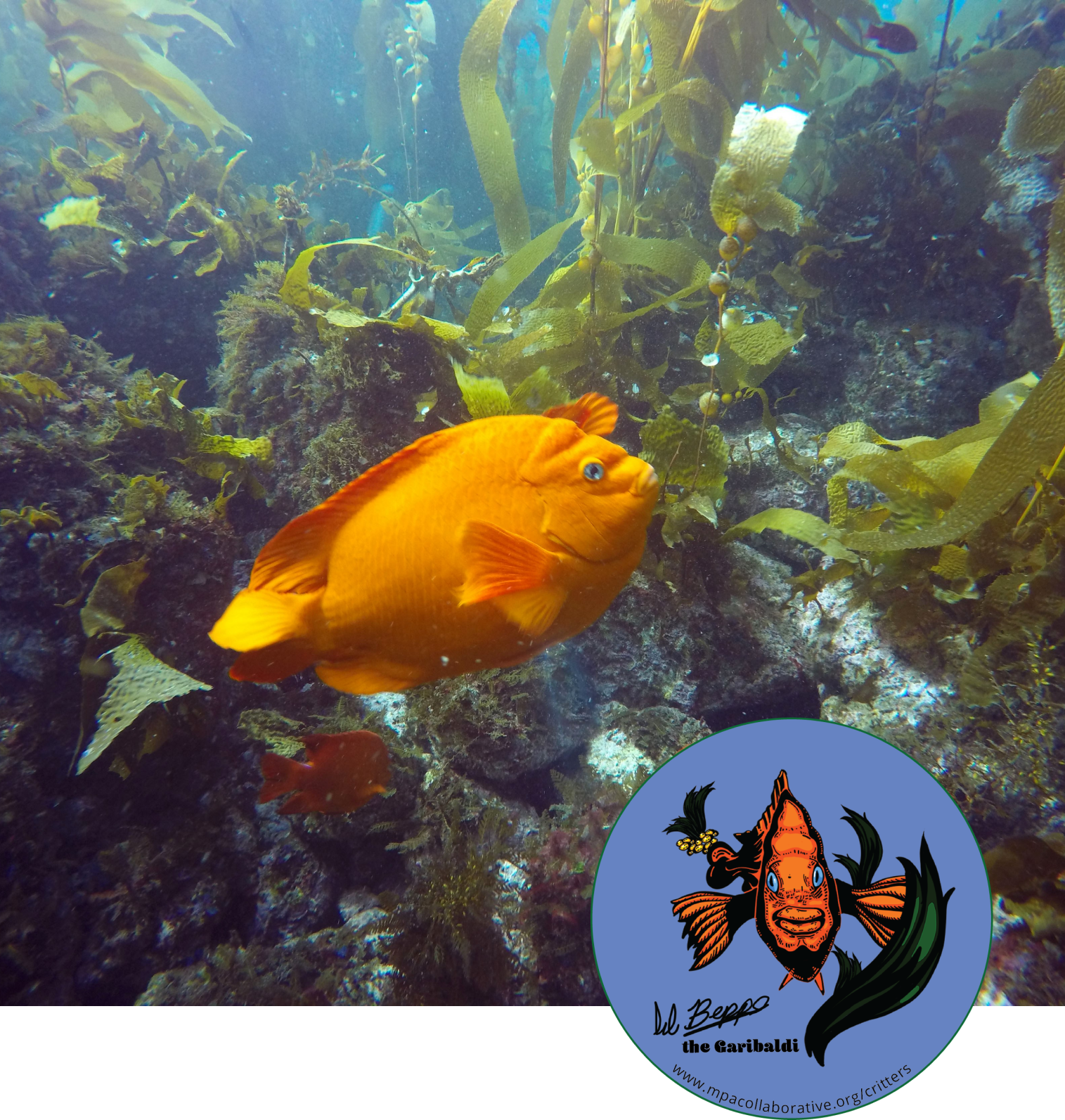
Photo by Amanda Van Diggelen, CDFW Environmental Scientist.
Genus: Hypsypops Species: rubicundus
Habitat: Kelp Forest Size: Up to 14 inches long
Range: Monterey Bay south to Baja California
Favorite Marine Protected Area (MPA): Casino Point State Marine Conservation Area at Catalina Island.
The garibaldi is a member of the damselfish family and is easily identified by its bright red-orange color. The fish gets its name from the 19th-century Italian general Guiseppe Garibaldi whose army wore red. The Garibaldi lives in cooler temperate waters around shallow rocky reefs and kelp forests. Garibaldi rely on critical kelp forest habitat for food protection, and reproductive success. They are very territorial, chasing away other Garibaldi and even divers from their nesting area.
Fun Fact: “The Garibaldi has been a protected species in California since 1996, when it was named California’s state marine fish,” says Tom Mason, a California Department of Fish and Wildlife (CDFW) Senior Marine Environmental Scientist Supervisor.
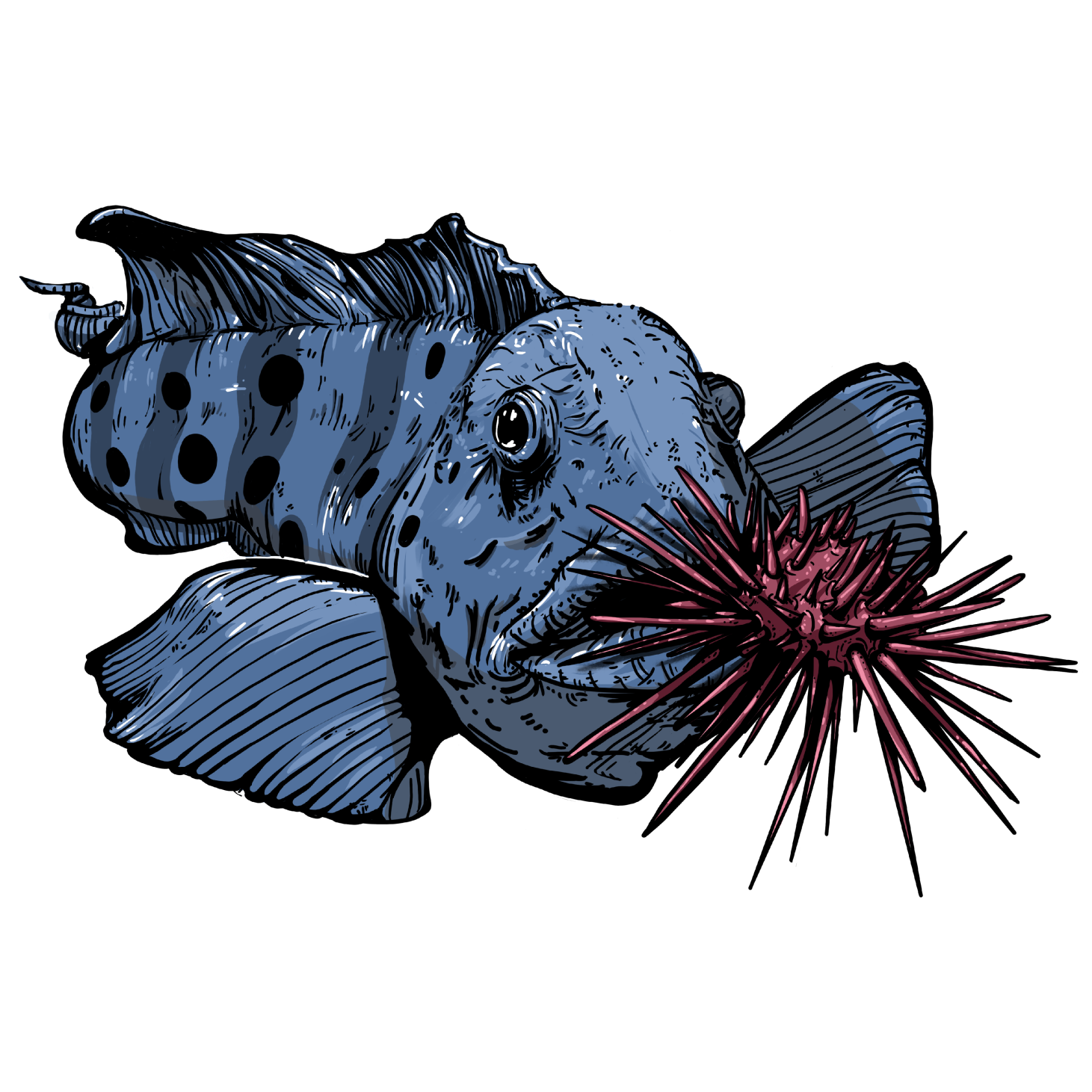
Lobito the Wolf Eel
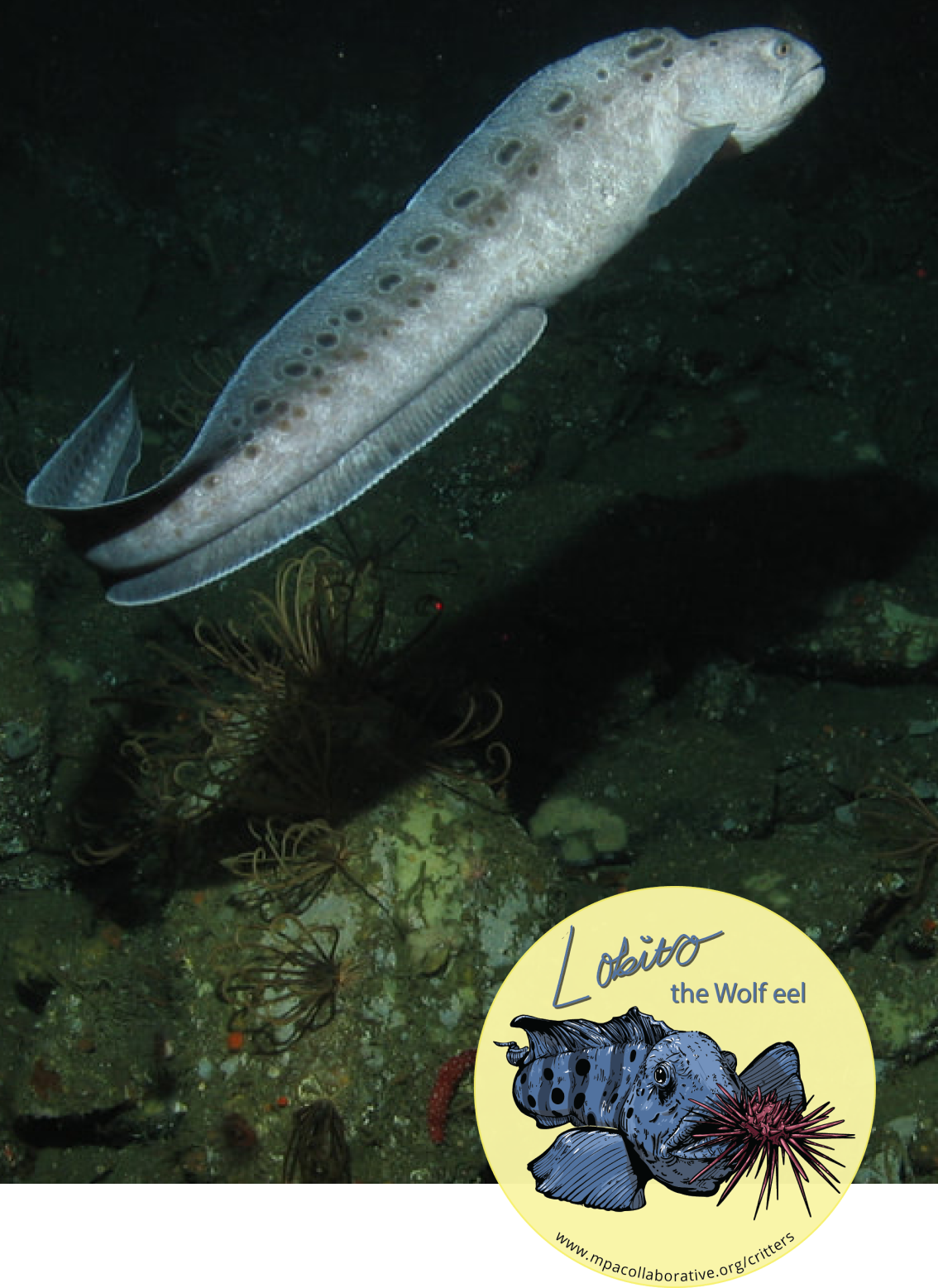
CDFW photo by MARE.
Genus: Anarrhichthys Species: ocellatus
Size: Up to 8 feet long Habitat: Rocky reef
Favorite Marine Protected Area (MPA): North Farallon Islands State Marine Reserve, less than 30 miles offshore of San Francisco
Range: North Pacific from the North American coast to the Sea of Japan
Lobito or “little wolf” in Spanish, is not a wolf or an eel, but instead belongs to a group of fish called the “wolf fishes”. Wolf eels are long and skinny. Adults like to hide inside small rocky crevices, with just their heads poking out to catch prey such as urchins, crabs, and shellfish. Young wolf eels spend their time in the open ocean, feeding on tiny animals called zooplankton. Adults are gray with dark spots and bands, have strong jaws and spiky front teeth. Despite their “scary” appearance, wolf eels are known to be quite friendly. According to California Department of Fish and Wildlife (CDFW) Marine Habitat Conservation Program Manager Becky Ota, “These shy, gentle, giants are worth getting to know!”
Fun Fact: Wolf eels mate for life and both parents care for the eggs by wrapping their bodies around them to offer protection.
Flappy the Flapjack Octopus
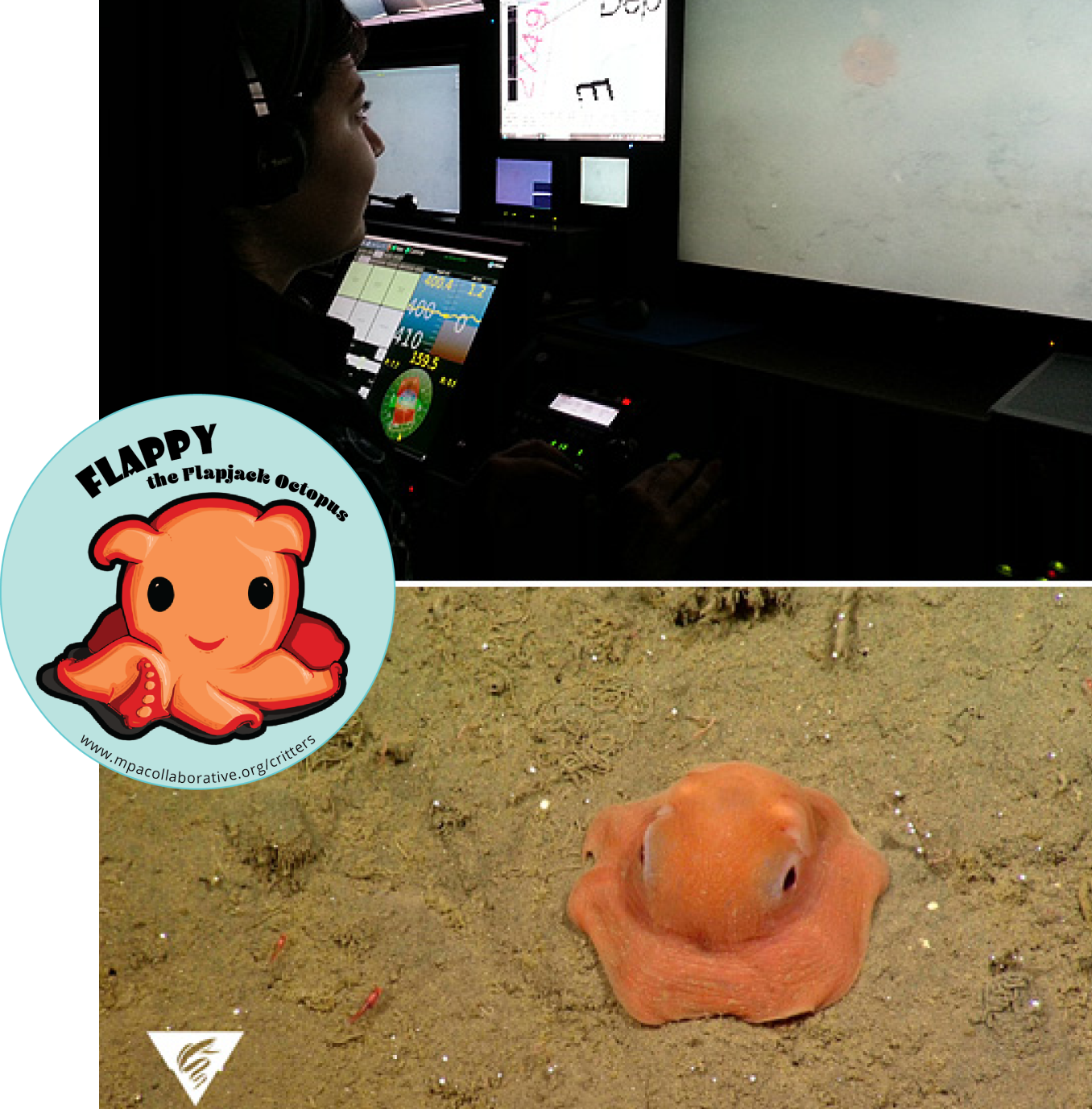
Image: © 2015 MBARI Bottom: A flapjack octopus in Monterey Canyon.
Genus: Opisthoteuthis Species: californiana Range: Unknown Size: Diameter up to 7 in or 18 cm Habitat: Submarine canyons
Favorite Marine Protected Area (MPA): Soquel Canyon State Marine Conservation Area in Monterey Bay
Scientists at the Monterey Bay Aquarium Research Institute discovered a new species of flapjack octopus that lives more than 1,000 feet below the ocean’s surface in Monterey Bay. At one point, scientists considered naming the octopus “Opisthoteuthis adorablis” because it is just so cute! Flapjack octopuses use their parachute-shaped body to hover slightly above the seafloor, looking for food like tiny crustaceans and worms. They move through the water by flapping their ear-like fins, pulsing their webbed arms, and pushing water through their body.
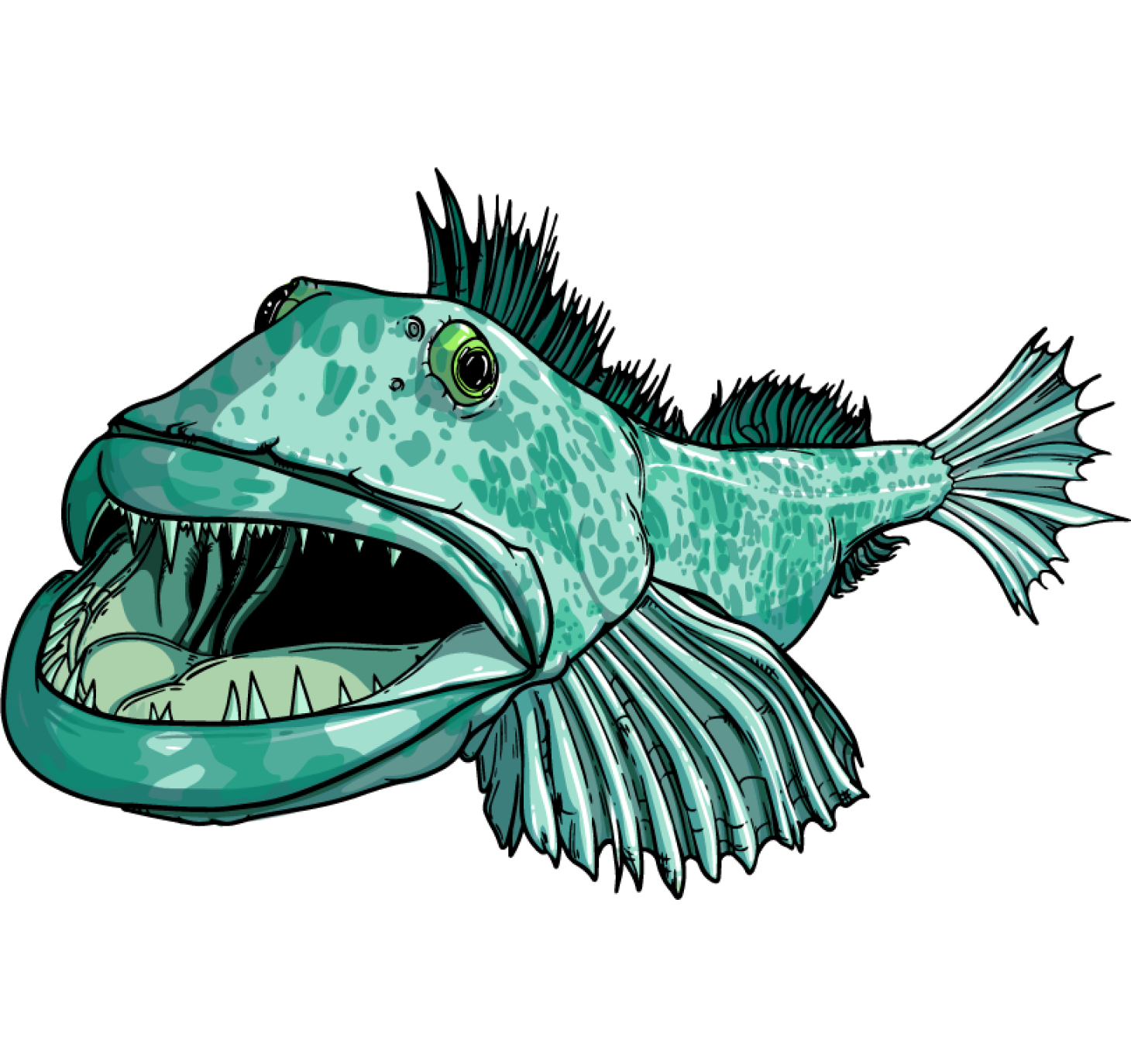
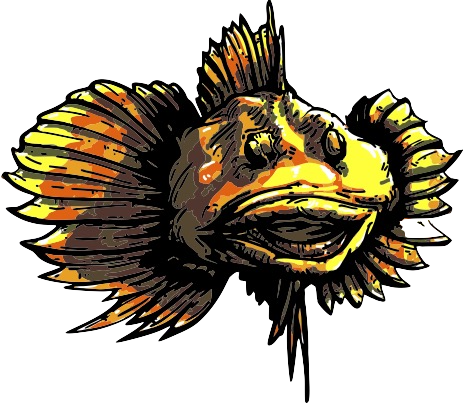
Ina the Lingcod
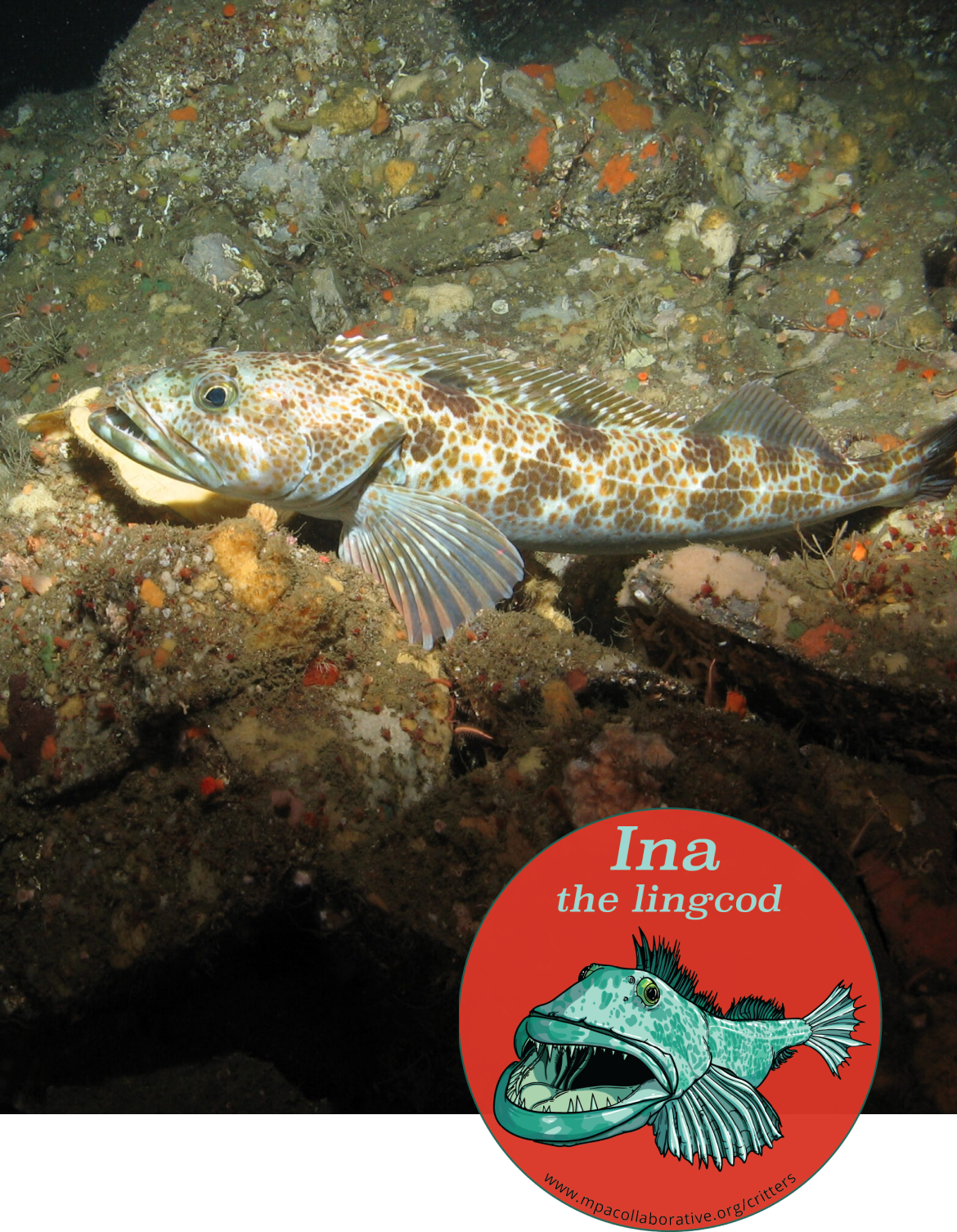
CDFW photo by MARE.
Genus: Ophiodon Species: elongatus Size: Up to 5 ft & 80 lbs
Habitat: Rocky reefs & kelp forests Range: Gulf of Alaska to Baja CA
Favorite Marine Protected Area (MPA): South Cape Mendocino State Marine Reserve
Beware of fangs! Known for their big heads and wide mouths with 18 large, sharp teeth, lingcod rely on the element of surprise to catch their prey. Their long, gray, brown, and greenish blotched bodies help them blend in with their environment. They are often found hiding around rocks, in holes, and under overhangs on the rocky seafloor among the seaweed, kelp, and eelgrass. They prey on bottom-dwelling fish, squid, crab, octopus, and even smaller lingcod. Ina, meaning “mother” in Tagalog, gets her name from her ability to have lots and lots of babies. Females usually produce between 60,000 and 500,000 eggs! The older and larger a lady lingcod gets, the more eggs she can lay, with the oldest females living up to 20 years! Environmental Scientist Chenchen Shen with the California Department of Fish and Wildlife states, “Lingcod is a prized catch among California anglers, and protecting the oldest females now can help ensure more to catch later!”
Fun Fact: According to the California Department of Fish and Wildlife Angling Records, the largest lingcod caught was in Mendocino in 1992, weighing in at 56 lbs.
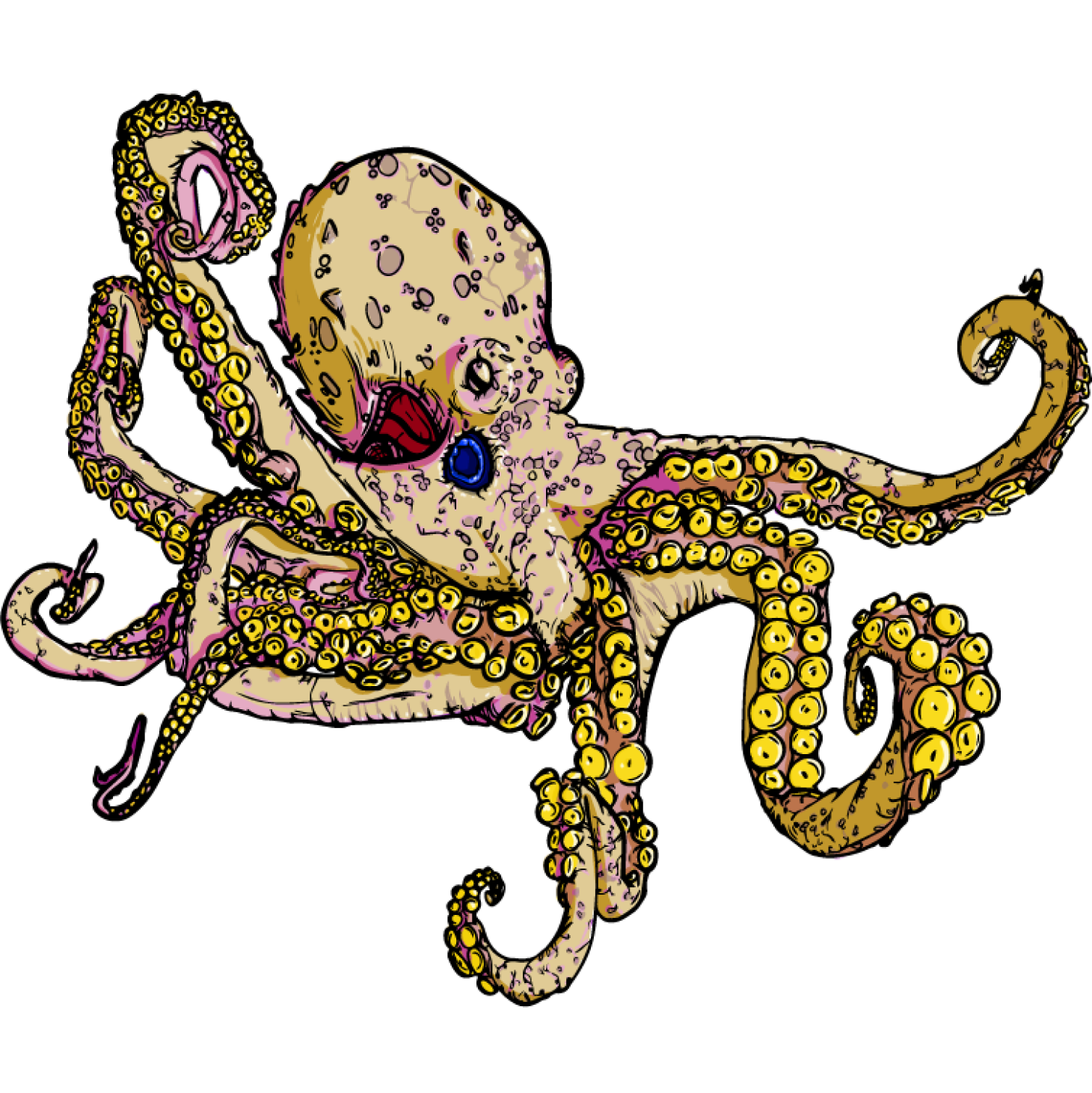
Xlewes the California two-spot Octopus
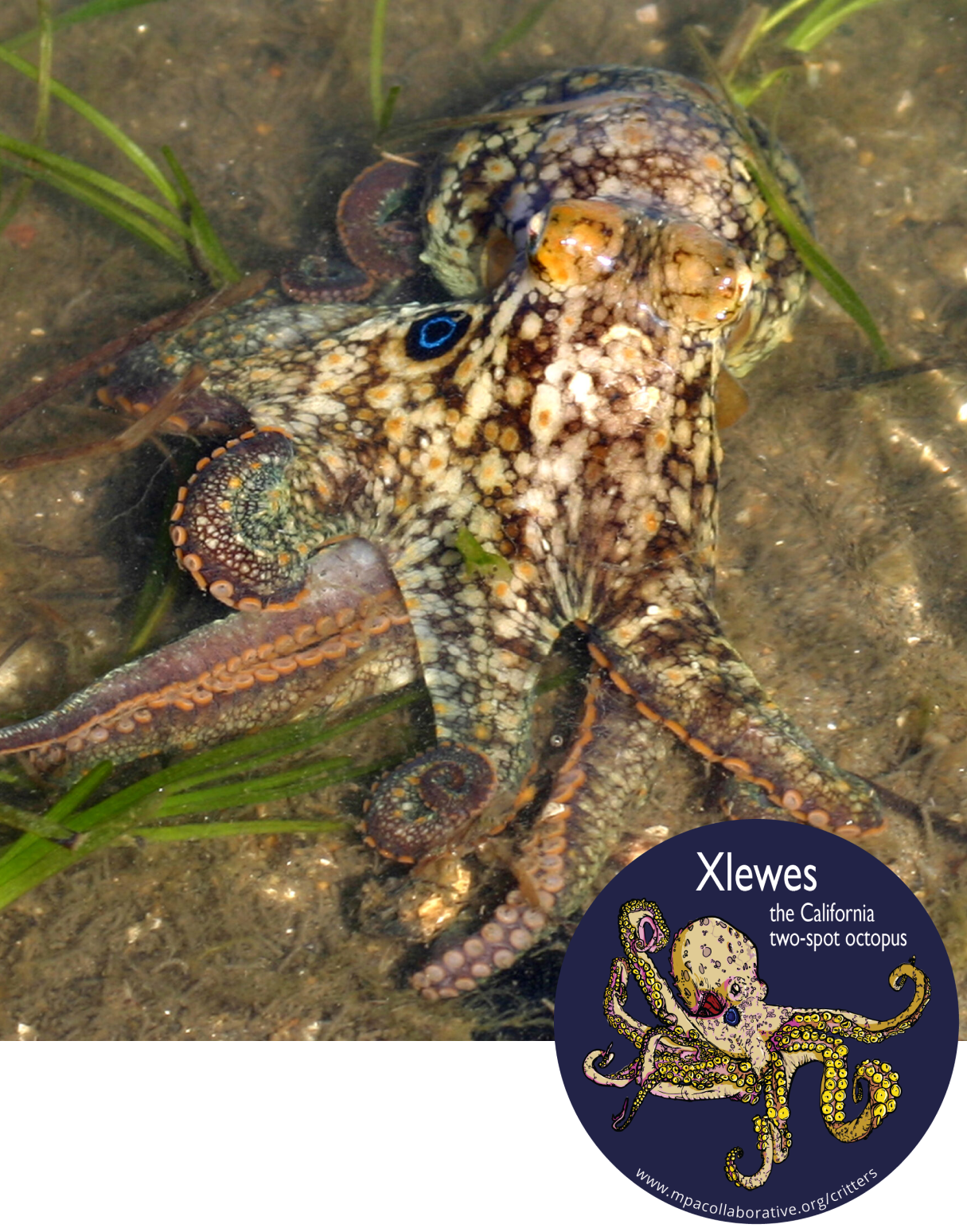
Image from Jay Vavra, Flickr through CA Sea Grant.
Genus: Octopus Species: bimaculoides
Habitat: Rocky Reefs and tide pools Size: About 18 in long
Range: Central California to northern Baja California
Favorite Marine Protected Area (MPA): Point Dume State Marine Reserve
Look carefully or you might miss this crazy cool critter on your next tidepool adventure! The California two-spot octopus has a mottled brown coloring but can change its skin color and texture as needed to help it hide, hunt, and find a mate. The two bright blue spots on either side of their bodies that look like eyes are thought to help the animal trick and scare away predators. These octopuses live fast and die young, emerging from the egg fully capable of hunting for themselves but living for only about one year in the wild. They mostly move around using their eight sucker-filled arms, but they can also shoot water out of their siphons causing them to jet propel through the water.
Fun Fact: Xlewes is the Šmuwič (Barbareno Chumash) word for octopus. The “X” in Xlewes is pronounced like a raspy “H” sound. See a short pronunciation guide and vocabulary list for the Šmuwič language at wishtoyo.org/cp-chumash-language.